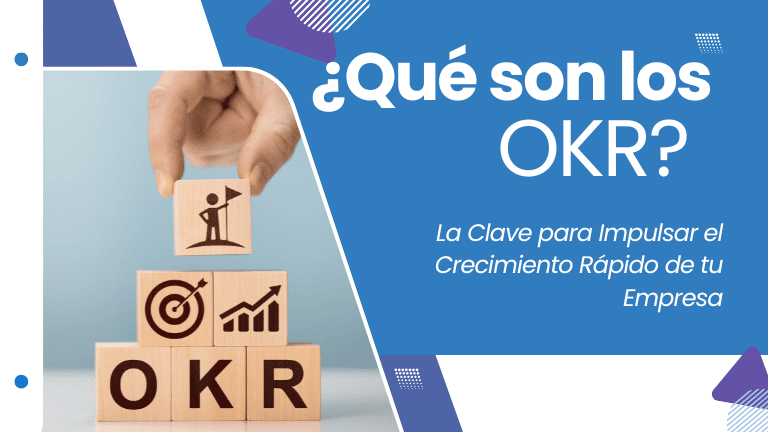
In a competitive business environment, agility and strategic clarity are essential for achieving sustained and scalable growth. One of the most effective methodologies for setting and achieving ambitious objectives is the OKR (Objectives and Key Results) system. In this article, you will discover what OKRs are, how they work, and how they can be the engine that drives your company's success.
What Are OKRs?
OKRs (Objectives and Key Results) are a strategic management methodology designed to align teams and organizations around clear and measurable goals. This approach combines inspiration with quantifiable data to ensure that every effort counts.
OKRs consist of two main components:
- Objectives: Inspirational, clear, and achievable statements that represent the “what” you want to accomplish.
- Key Results: Specific and measurable indicators that describe the “how” the objectives will be achieved.
For example:
- Objective: Increase brand presence on social media.
- Key Results:
- Grow Instagram followers by 30%.
- Publish four viral pieces of content in a quarter.
- Improve the engagement rate by 20%.
Benefits of Implementing OKRs
Adopting OKRs can generate a significant impact on your organization. Here are some of the most notable benefits:
- Focus on what matters: OKRs help you concentrate on the goals that truly count.
- Alignment and transparency: They foster cross-departmental collaboration by keeping all teams focused on a common objective.
- Continuous progress measurement: Key results make it easier to track advances and adjust strategies.
- Adaptability: OKRs are flexible and can be adjusted to respond to business dynamics.
How to Implement OKRs in Your Company?
Implementing OKRs may seem challenging at first, but following these steps will help you do it successfully:
- Define clear and ambitious objectives: Collaborate with leaders from each area to identify goals that are challenging yet achievable.
- Select specific key results: Ensure that key results are measurable and directly related to the main objective.
- Establish quarterly cycles: Review and adjust OKRs every quarter to maintain focus and relevance.
- Foster evaluation and continuous learning: At the end of each cycle, reflect on the results obtained to identify areas for improvement.
Success Stories with OKRs
Companies like Google, Intel, and Netflix have implemented OKRs to achieve extraordinary results. Google, for example, has used this methodology since its early days, which has contributed to its focus on innovation and global impact.
Transform Your Business with OKRs
OKRs are not just a management tool — they are a comprehensive strategy for achieving success. By adopting this methodology, your company can achieve greater clarity, alignment, and impactful results in less time. Ready to get started with OKRs? Take the first step toward a business transformation today.