
Defining objectives and setting goals is a fundamental part of any business or venture. Doing it correctly will not only make you more productive, but will also boost your performance and that of your team.
To achieve good results, it is necessary to set objectives the right way. It is not the same to have "increase sales" as a goal as it is to have "increase sales by 10% by the end of the year through the implementation of digital marketing campaigns."
This is where SMART objectives come in, and in this article we will tell you all about them.
What are SMART objectives?
SMART objectives (or smart goals) are goals that are set in a specific and concrete way, allowing you to measure progress and performance toward achieving the proposed objectives.
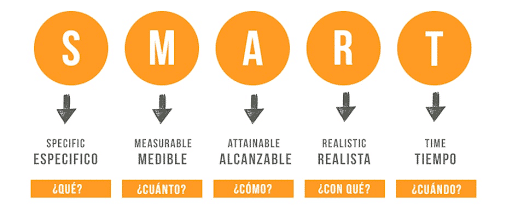
The word "SMART" is an acronym that stands for Specific, Measurable, Achievable, Relevant, and Timely. For good results in meeting your goals, all five characteristics must be present in your objectives. Let's explain each one:
- Specific
Every objective must be specific — that is, oriented toward a particular task, aspect, or action. To ensure your objectives meet this criterion, ask yourself: What do I want to achieve?
- Measurable
Objectives must be measurable in order to determine progress and results. Ask yourself: What tools and indicators can I use to measure efficiency?
- Achievable
An achievable objective is one that can be reached with the means available. When setting a goal, ask yourself: Is this attainable given the current state of the business?
- Relevant
A relevant objective aligns perfectly with the ideals and general goals of your business. There is no sense in setting a goal that is not consistent with the company's identity and mission. Ask yourself: How does this objective impact the company as a whole?
- Timely
A famous saying goes: "What has no deadline never gets done." Setting deadlines for the fulfillment of your objectives is essential. Of course, the deadline must be achievable, so ask yourself: When should the objective be completed?
How to use SMART objectives in my business or work?
Organization is the key to business success, and it also applies to setting and meeting objectives. When your business has SMART goals, work becomes organized and performance improves.
Here are some tips on how to apply SMART objectives:
- To make your objective specific, clearly identify what you want to achieve, the steps you will take, and who will actively participate in the process.
- Make sure you have the necessary tools to measure progress. You can also set intermediate milestones and progress percentages.
- Regularly analyze the results obtained. Keep proper control and documentation.
- When defining the steps to achieve the objective, consider the available resources (number of employees, available equipment, etc.).
- Study market behavior and your target audience to set achievable goals.
- Set general, monthly, weekly, and daily goals — always keeping the estimated date for the overall objective in mind.
Example
Here are some examples of applying SMART objectives to your business:
- Increase website traffic by 50% (from 100 to 150 monthly visits) in 80 days by publishing double the content to gain more subscribers.
- Increase sales by 10% (from $1,000 to $1,100 monthly) in 2 months by running social media marketing campaigns to reduce spending on conventional channels (radio and TV).
Conclusion
SMART objectives are essential for ensuring the success of any business or company. They will not only help you focus your efforts, but will also help you position yourself in the market. Start applying them today in your business or work.